History
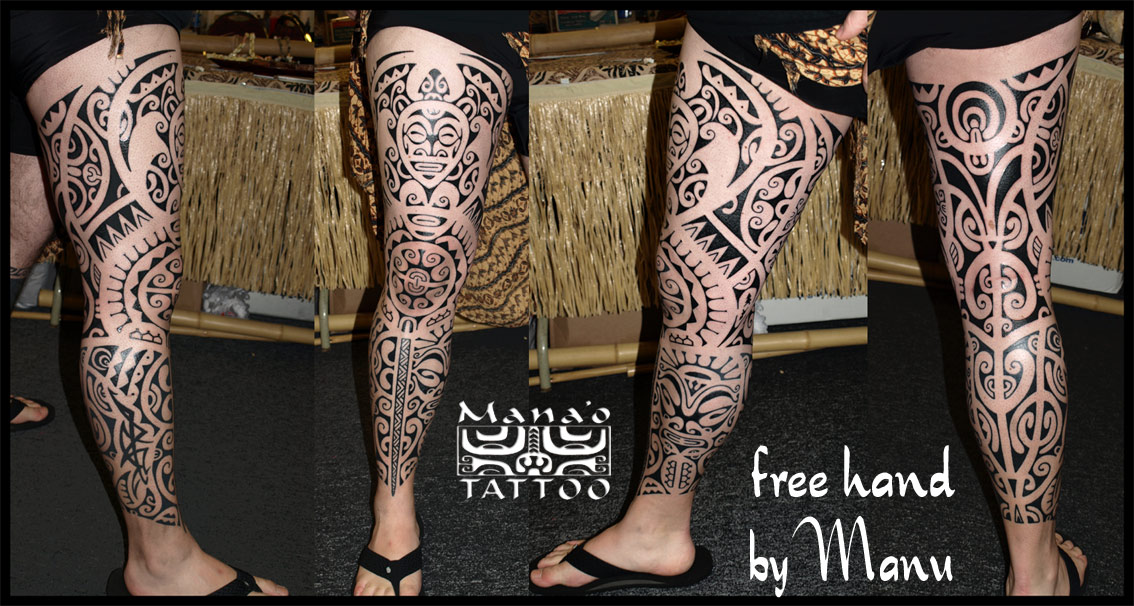
Suppressed by missionaries from the 1820s onward, Tahitian tatau was reawakened in the 1980s alongside the wider Ma'ohi cultural revival. Contemporary Tahitian style pulls from Marquesan patu tiki and Cook Islands work while keeping distinctive band structures and a lighter, more open composition.
Typical placements
Chest-to-shoulder plates ('epaulettes'), full sleeves, back panels, thigh bands, and ribcage compositions.
Signature motifs
- Ono — bonito fish for strength at sea
- Va'a — canoe silhouettes across the shoulder
- Ta'ovala — woven-mat bands framing the piece
- Marae — stepped platform forms of the sacred grounds
- Rā — sun disks with radial rays
Sources
Tools, techniques & ceremonies
Documented from published ethnography and museum records.
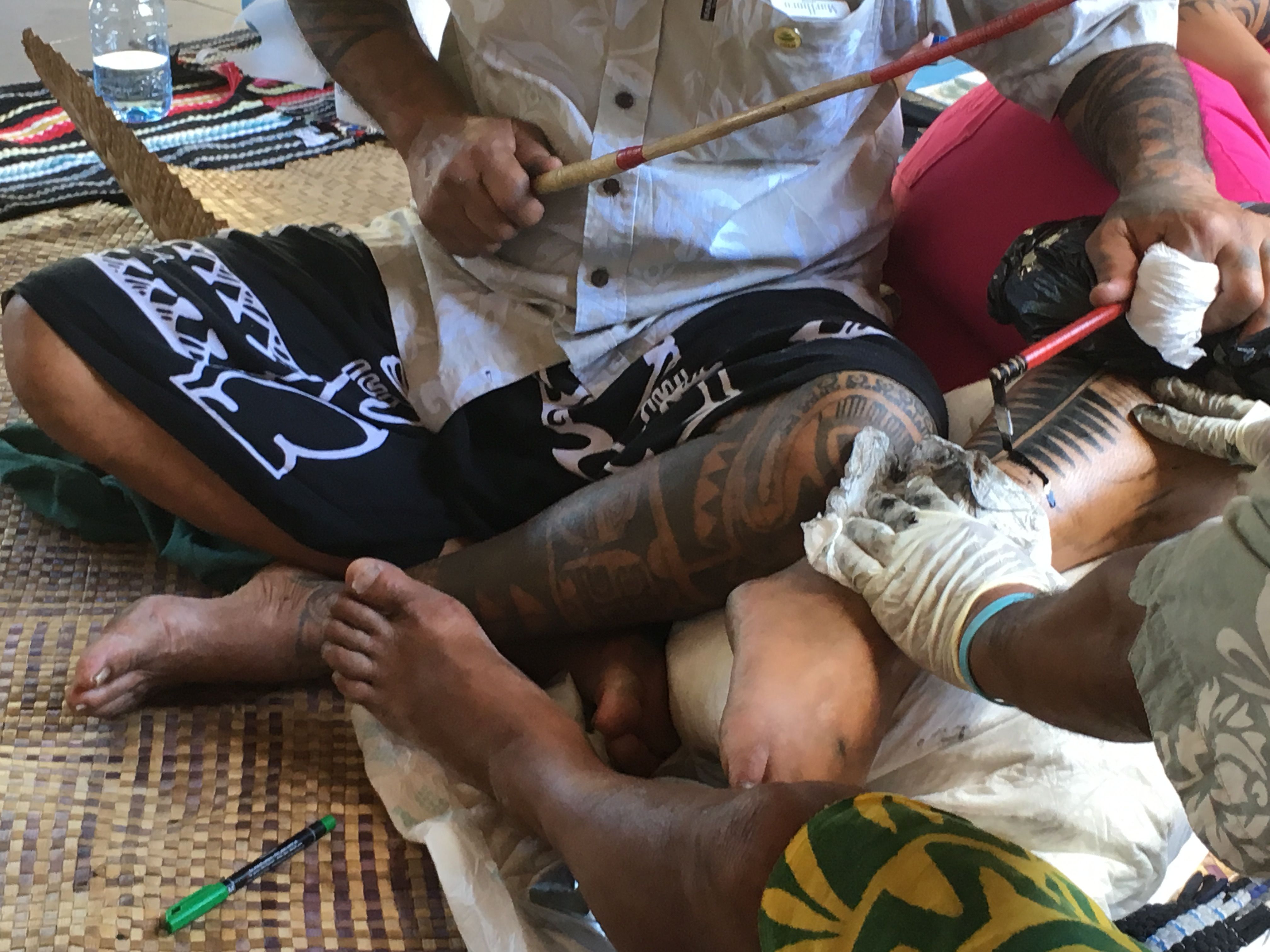
Traditional Tahitian tattooing tools, called 'tatatau', consist of a comb with 3 to 20 needles carved from bone, shell, or shark's teeth.
Source: Moorea Tattoo, "POLYNESIAN TATTOO", Moorea Tattoo, Unknown
The tattooing technique involves placing the comb on the skin and tapping the handle with a second wooden stick (mallet ) to puncture the skin and insert the pigment.
Source: Moorea Tattoo, "POLYNESIAN TATTOO", Moorea Tattoo, Unknown
The traditional tattooing process requires two artists: one to stretch the skin and the other to perform the tapping (tat-tau-ing ).
Source: Moorea Tattoo, "POLYNESIAN TATTOO", Moorea Tattoo, Unknown
The ink used in traditional Tahitian tattooing was produced from charcoal made from the ti’a’iri (candlenut tree ), diluted in oil or water.
Source: Tahiti Tourisme, "Polynesian tattooing", Tahiti Tourisme, Unknown
In ancient Tahitian society, tattoos were linked to important rituals, such as the passage from puberty to adulthood and marriage.
Source: Tahiti Tourisme, "Polynesian tattooing", Tahiti Tourisme, Unknown
Polynesians held 'tatau' ceremonies that lasted from several days to several weeks to celebrate the completion of the tattooing challenge, which was a test of endurance.
Tattoos were considered a gift from the gods that bestowed supernatural power (Mana ) on the wearer, offering protection, prestige, good health, well-being, and fertility.
Source: Tahiti Tourisme, "Polynesian tattooing", Tahiti Tourisme, Unknown
Colonial suppression & modern revival
Historical timeline with citations.
With the arrival of Europeans and Christian missionaries in the 18th century, the art of Polynesian tattooing was nearly eradicated, as it was considered a sinful glorification of the skin and strictly forbidden.
Source: Moorea Tattoo, "POLYNESIAN TATTOO", Moorea Tattoo, Unknown
Traditional tattooing was banned in 1986 by the Tahiti-based French Ministry of Health due to difficulties in sterilizing wooden and bone equipment.
Source: Moorea Tattoo, "POLYNESIAN TATTOO", Moorea Tattoo, Unknown
The modern renaissance of Polynesian tattoo began in 1981, and it has since regained recognition as a highly respected art form.
Source: Moorea Tattoo, "POLYNESIAN TATTOO", Moorea Tattoo, Unknown
The ban on traditional tattooing tools was lifted in 2001.
Source: Moorea Tattoo, "POLYNESIAN TATTOO", Moorea Tattoo, Unknown
The rebirth of tatau is seen as a tremendous affirmation of identity in the South Pacific, with schools and social media now replacing oral transmission to share different techniques.
Source: PONANT US Magazine, "The Polynesian tattoo: a history", PONANT US Magazine, 2024
Full cross-tradition reference: open the sourced reference guide.
Glossary terms
Definitions live in the design glossary.
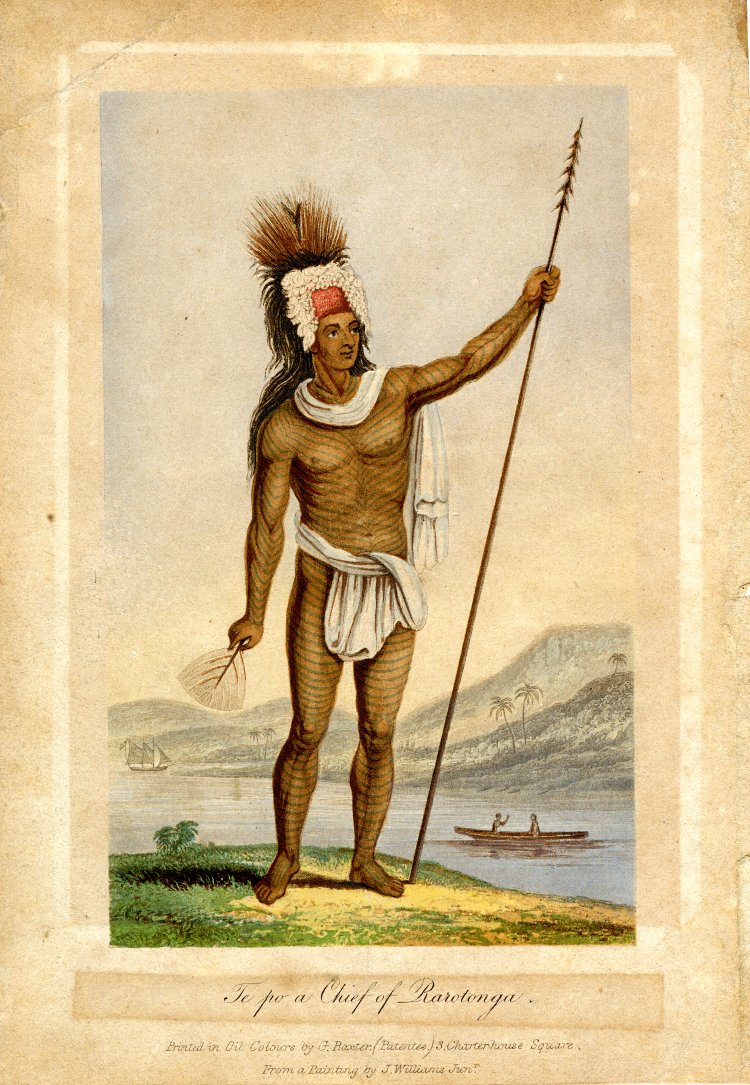
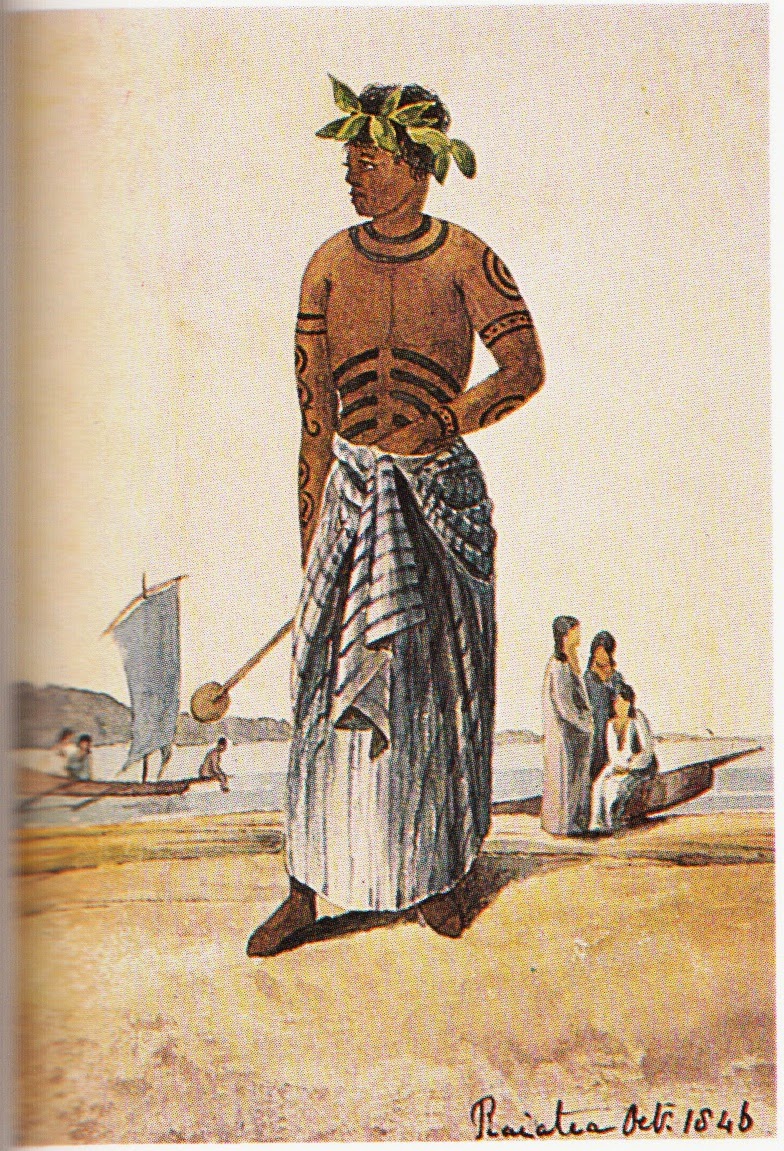
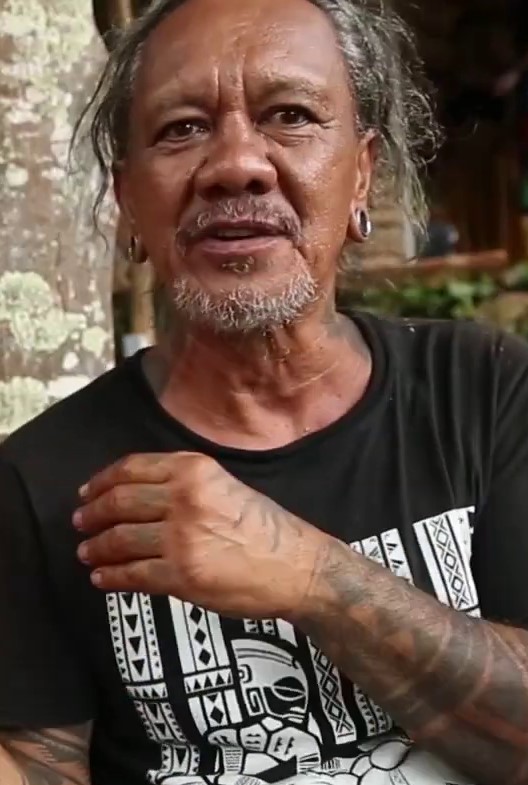
Tahitian gallery5 photos
Wikimedia Commons imagery filtered to Tahitian.
Frequently asked questions
What is a Tahitian tattoo?+
The Tahitian word tatau — recorded by Joseph Banks on Cook's first voyage in 1769 — is the source of the English word 'tattoo'. The tradition is known as Tatau (Society Islands) and comes from Society Islands · French Polynesia.
What are the signature motifs of Tahitian tattoos?+
Signature Tahitian motifs include: Ono — bonito fish for strength at sea; Va'a — canoe silhouettes across the shoulder; Ta'ovala — woven-mat bands framing the piece; Marae — stepped platform forms of the sacred grounds; Rā — sun disks with radial rays.
Where on the body are Tahitian tattoos traditionally placed?+
Chest-to-shoulder plates ('epaulettes'), full sleeves, back panels, thigh bands, and ribcage compositions.
Related
Go deeper on Tahitian tattoos
Motif library →
See Tahitian motifs alongside symbols from every tradition.
Design glossary →
Tahitian vocabulary in context.
Placement guide →
How these designs sit on sleeves, chest, back and legs.
Artist directory →
Practitioners working in Tahitian tradition.
Meanings & symbols →
Long-form explainer covering every tradition.
Choosing an artist →
Consultation checklist and questions to ask.