History
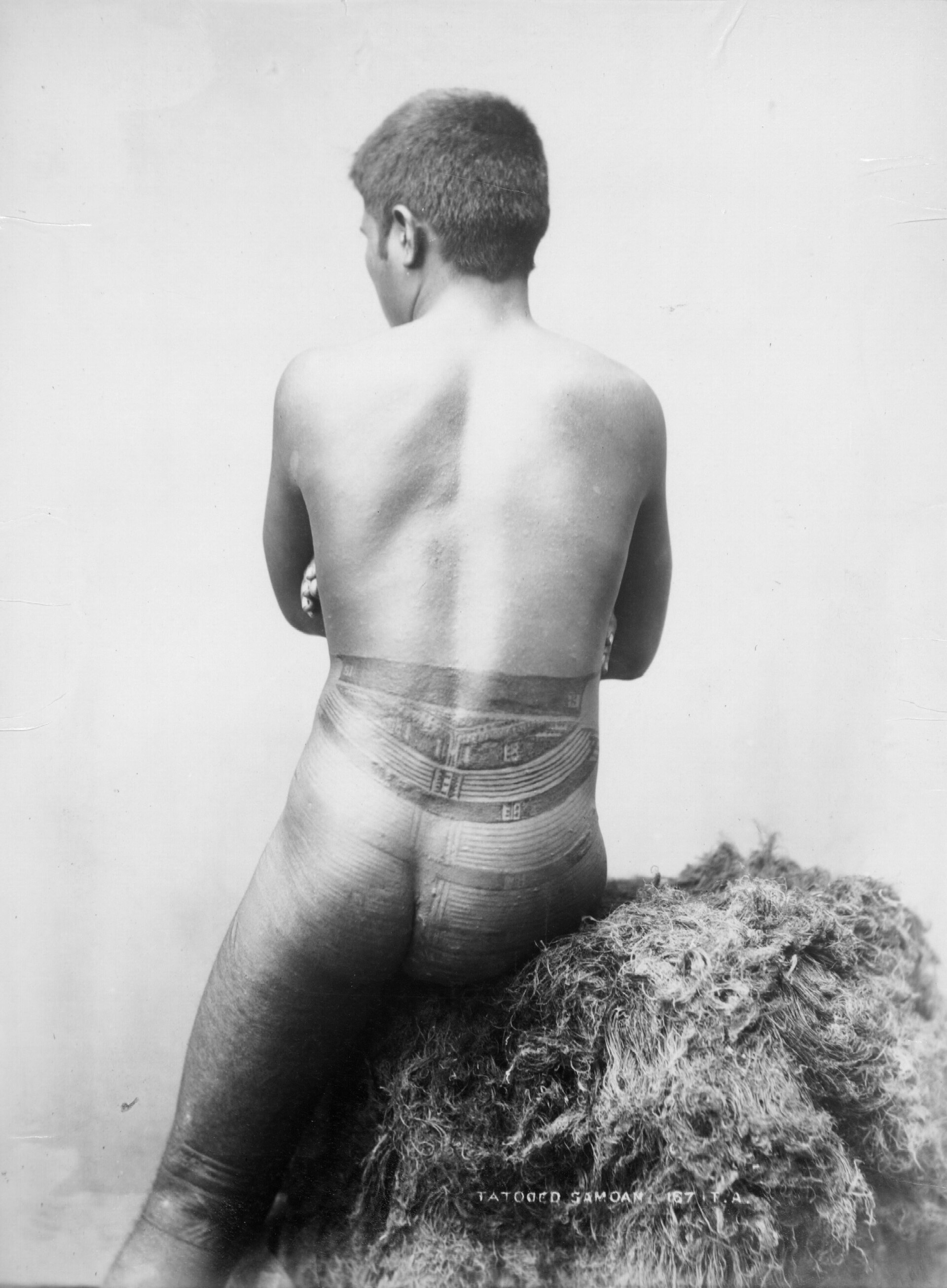
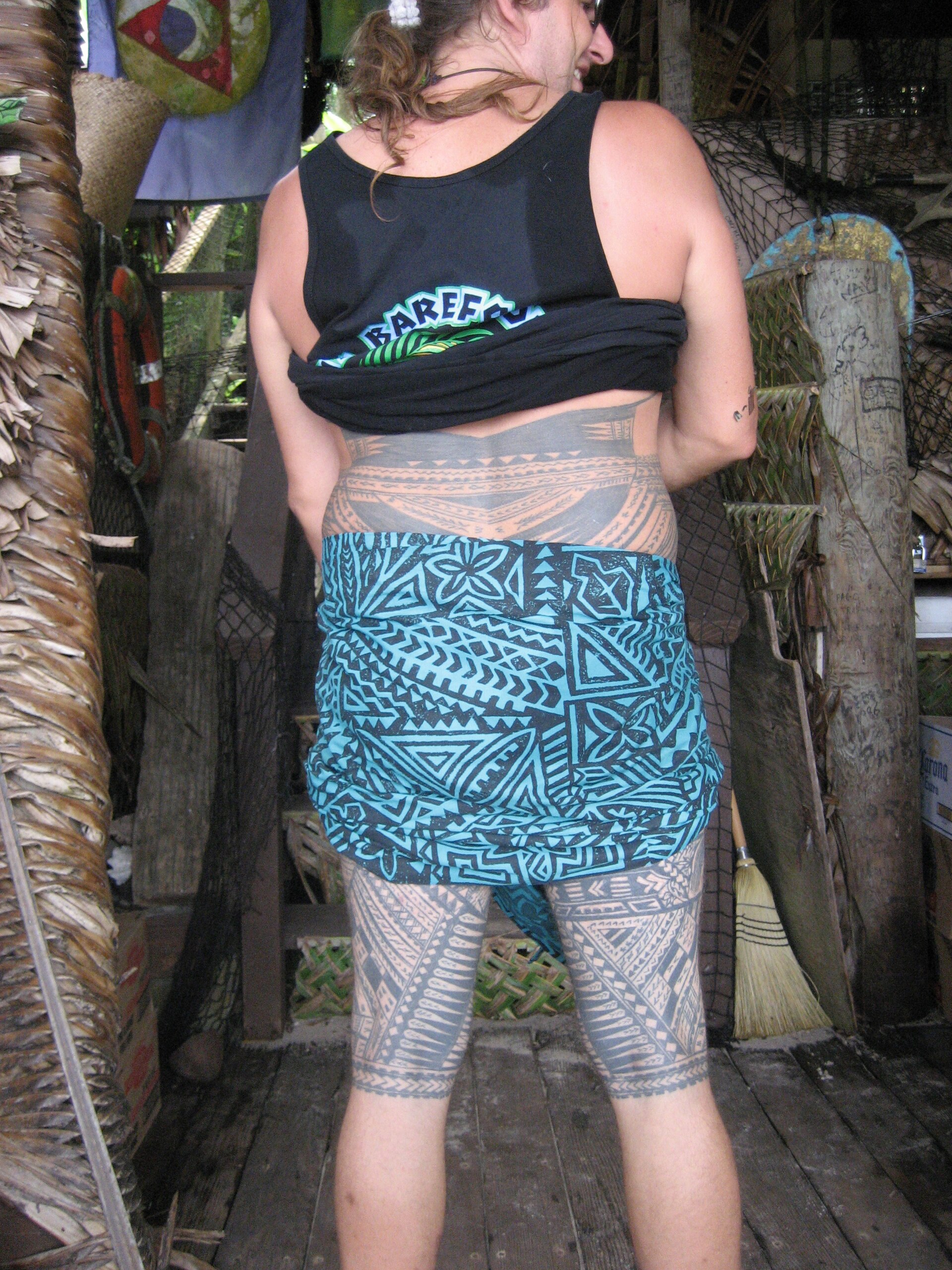
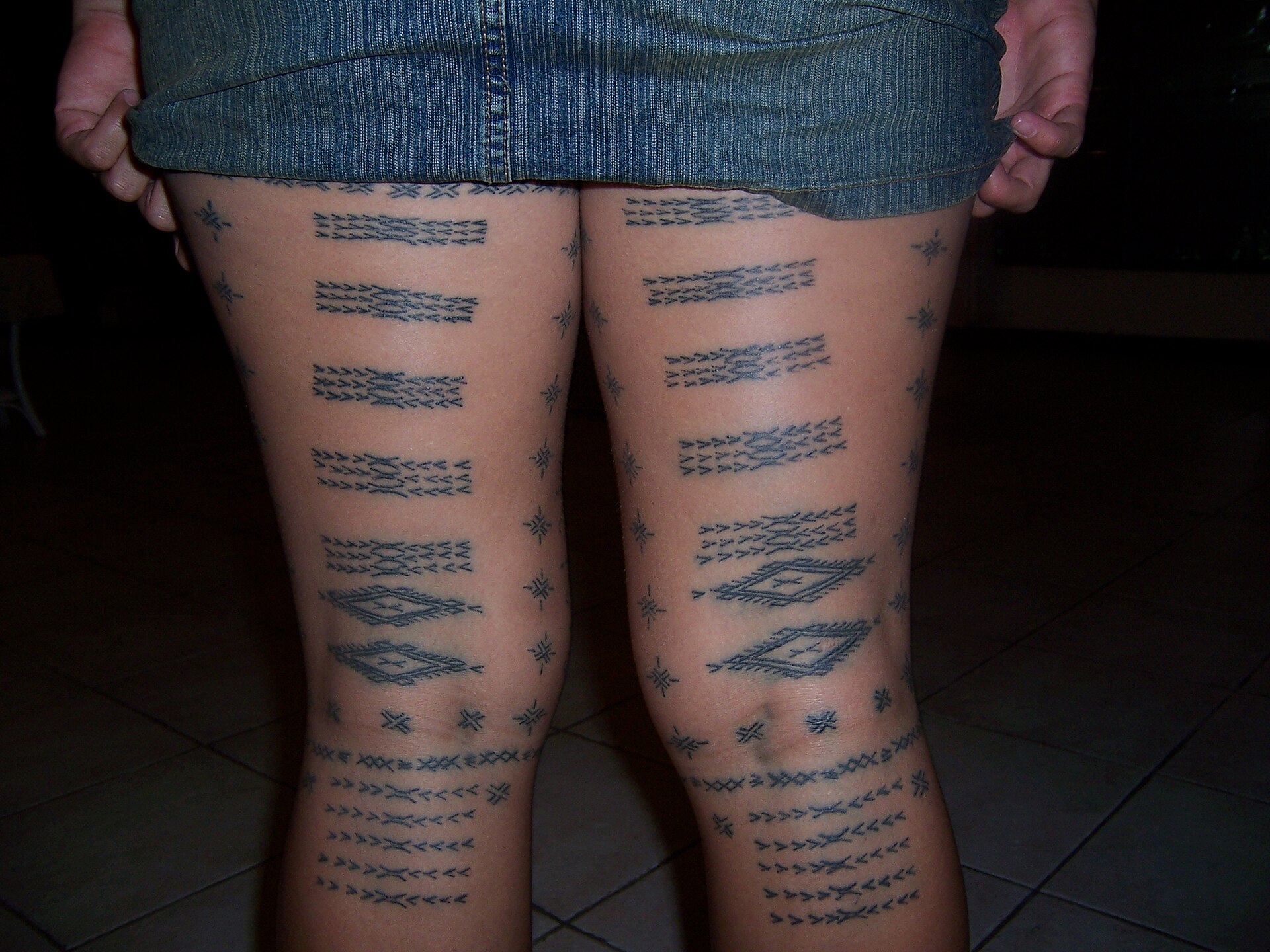
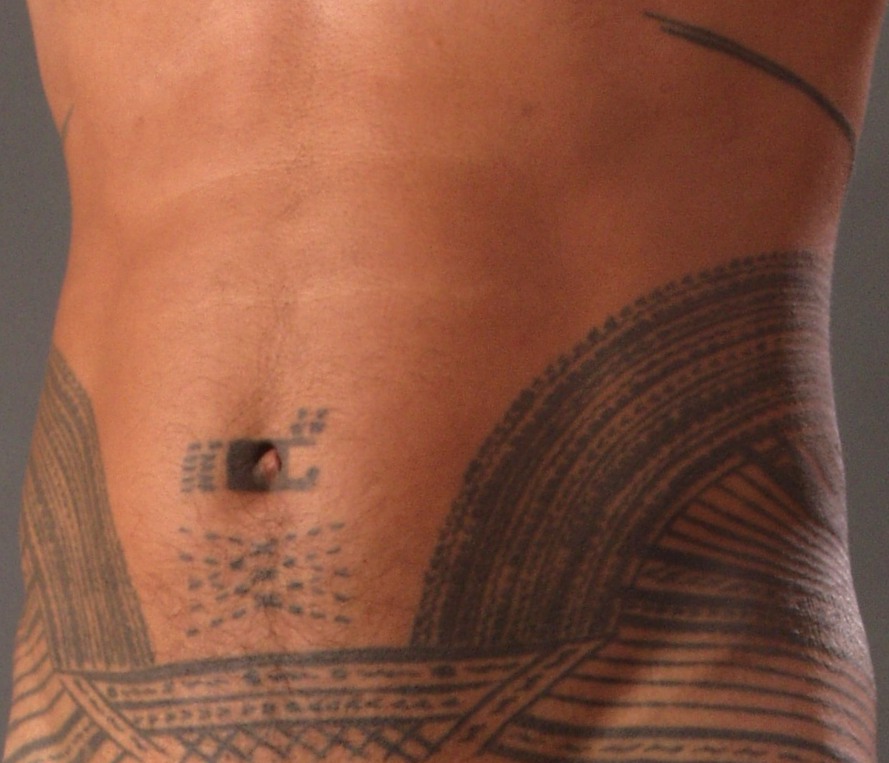
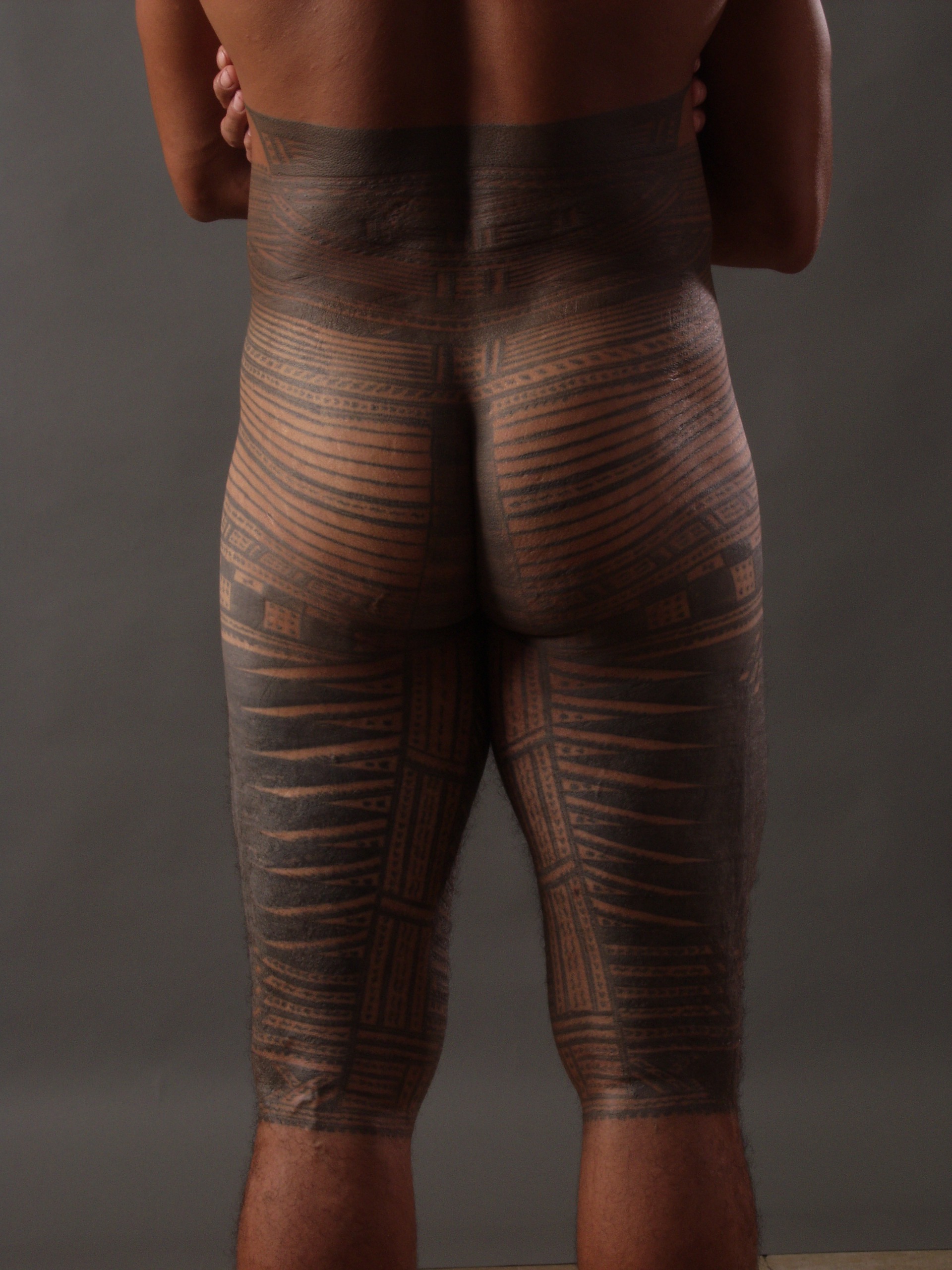
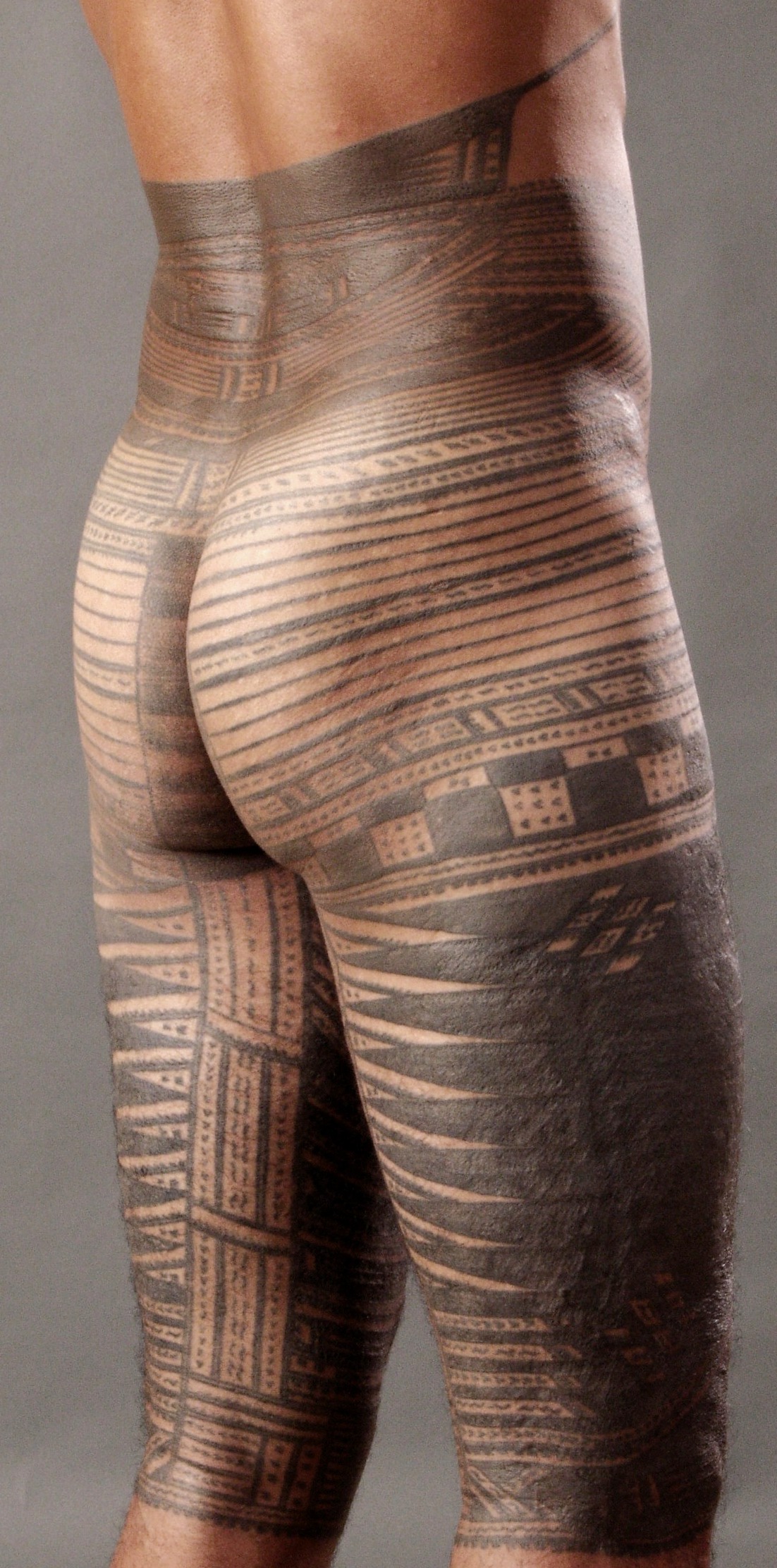
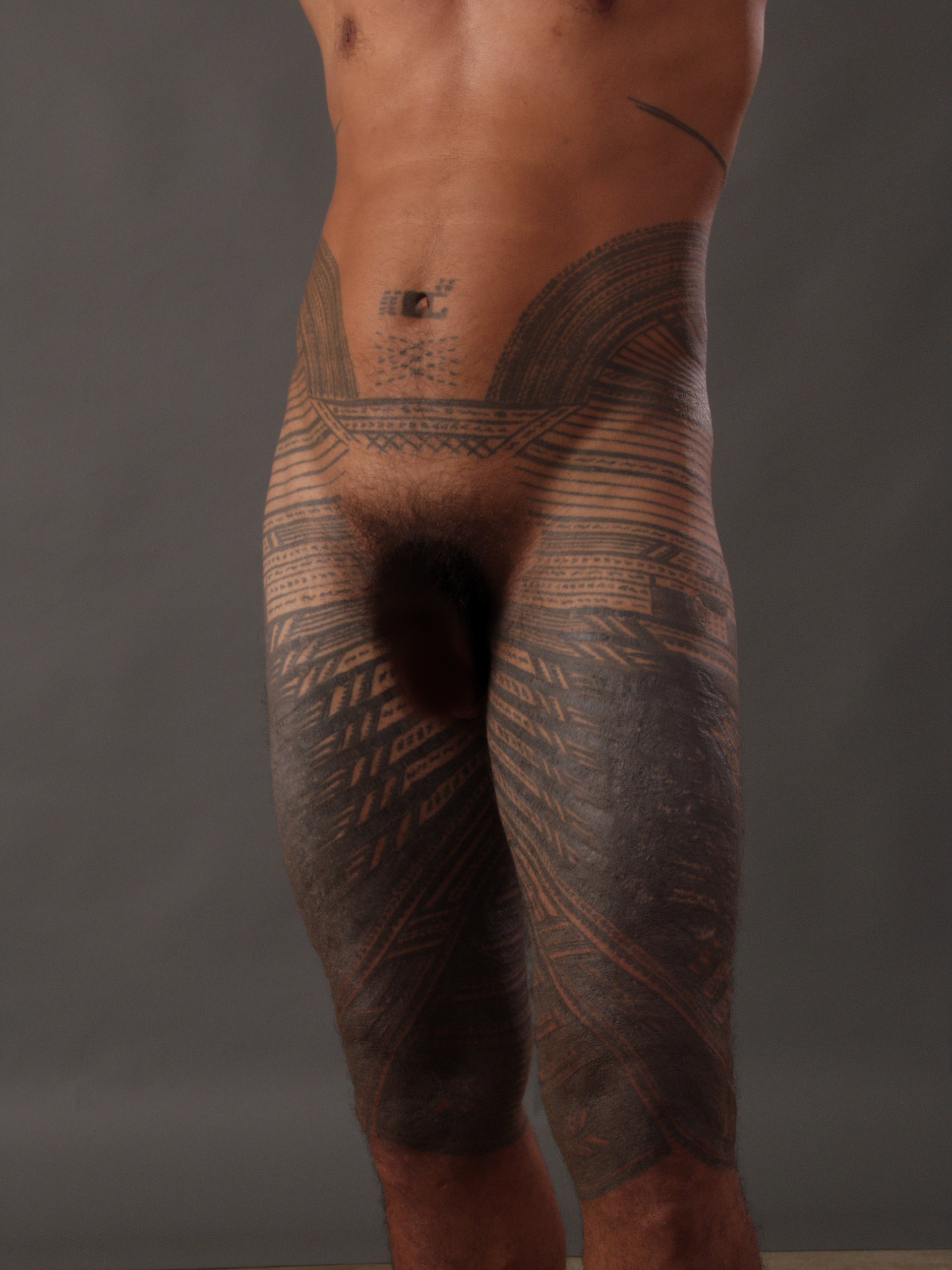
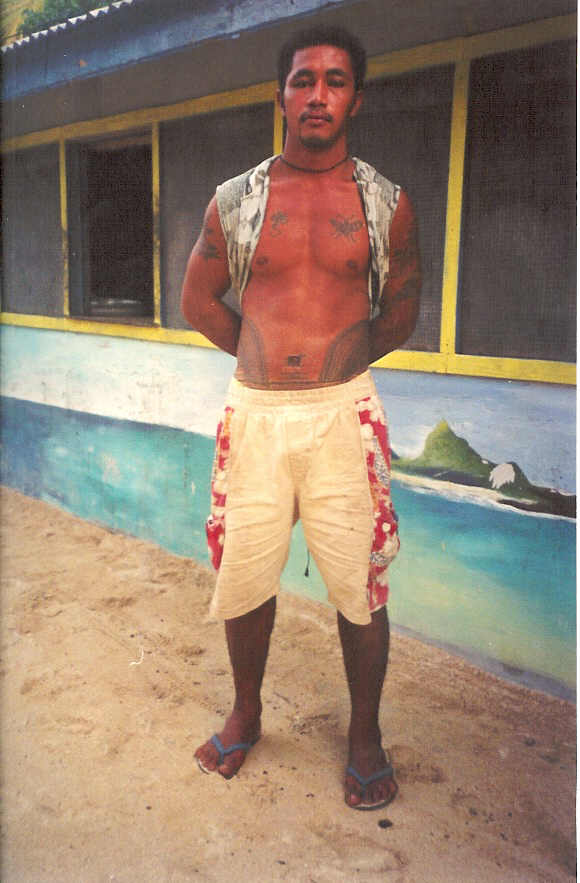
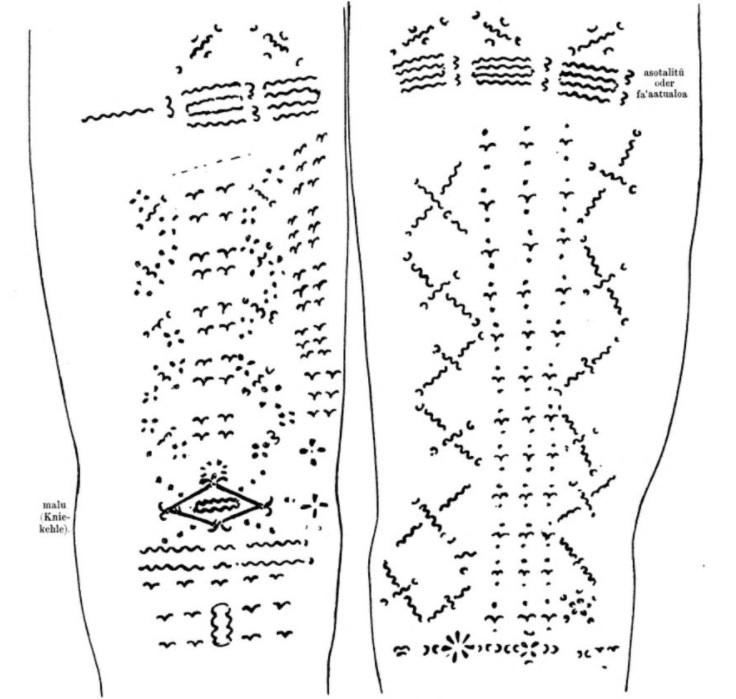
Hand-tapped with au (bone-toothed combs) by hereditary tufuga tā tatau, the pe'a covers a man from waist to knee in dense geometric bands earned over weeks of endurance. The malu is a lighter feminine counterpart from upper thigh to just below the knee. Missionary suppression in the 19th century failed to break the practice, and tatau remains a living rite of passage.
Typical placements
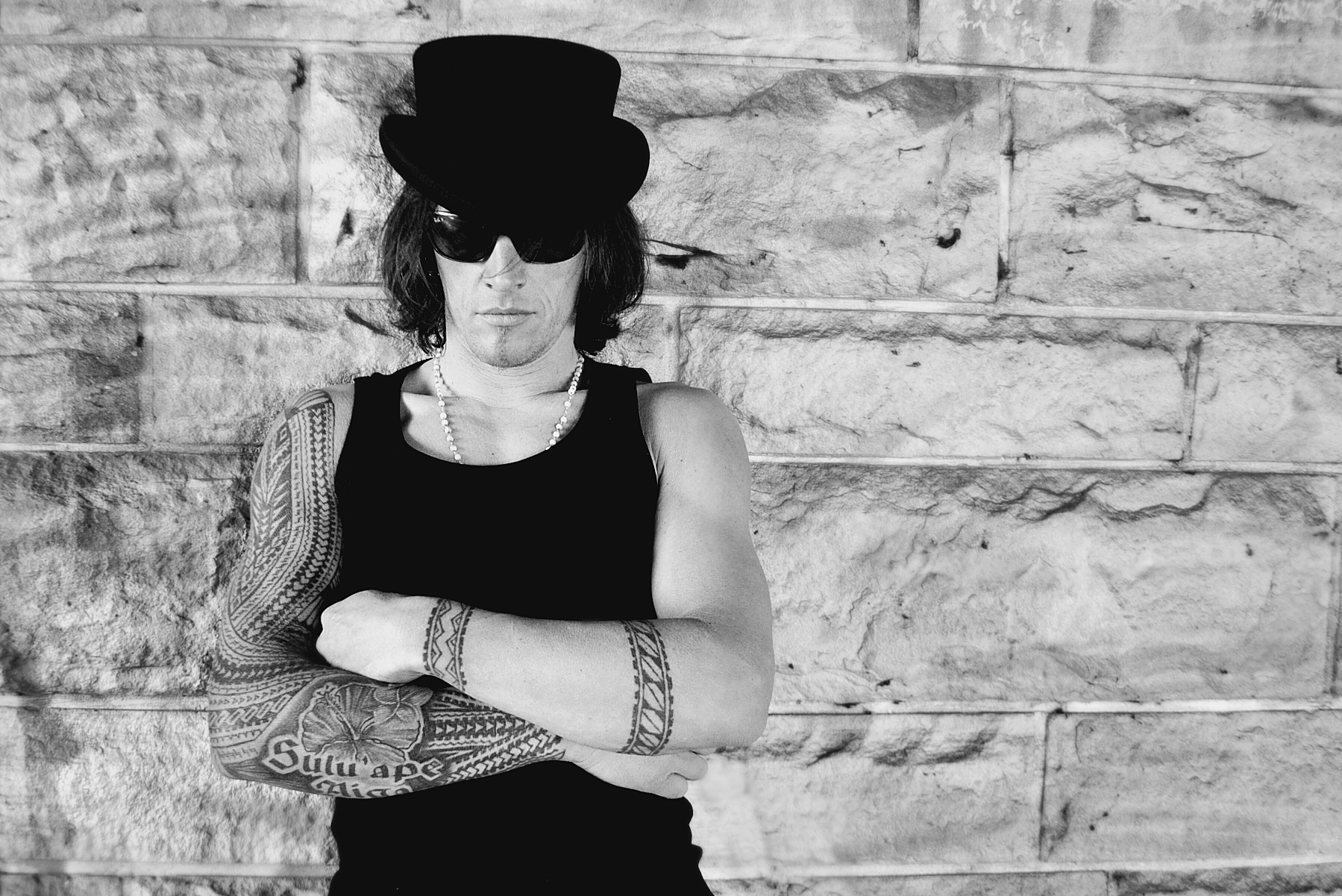
Waist-to-knee body suits (pe'a), thigh-to-knee bands (malu), and increasingly modern half- and full-sleeve interpretations.
Signature motifs
- Va'a — canoe forms marking journey and lineage
- Aveau — starburst clusters for guidance
- Fa'avaetuli — plover-foot rows along the spine
- Pula tama & pula tele — filled dots and blocks
- Ulumanu — bird-of-the-heart bands wrapping the thighs
Sources
Tools, techniques & ceremonies
Documented from published ethnography and museum records.
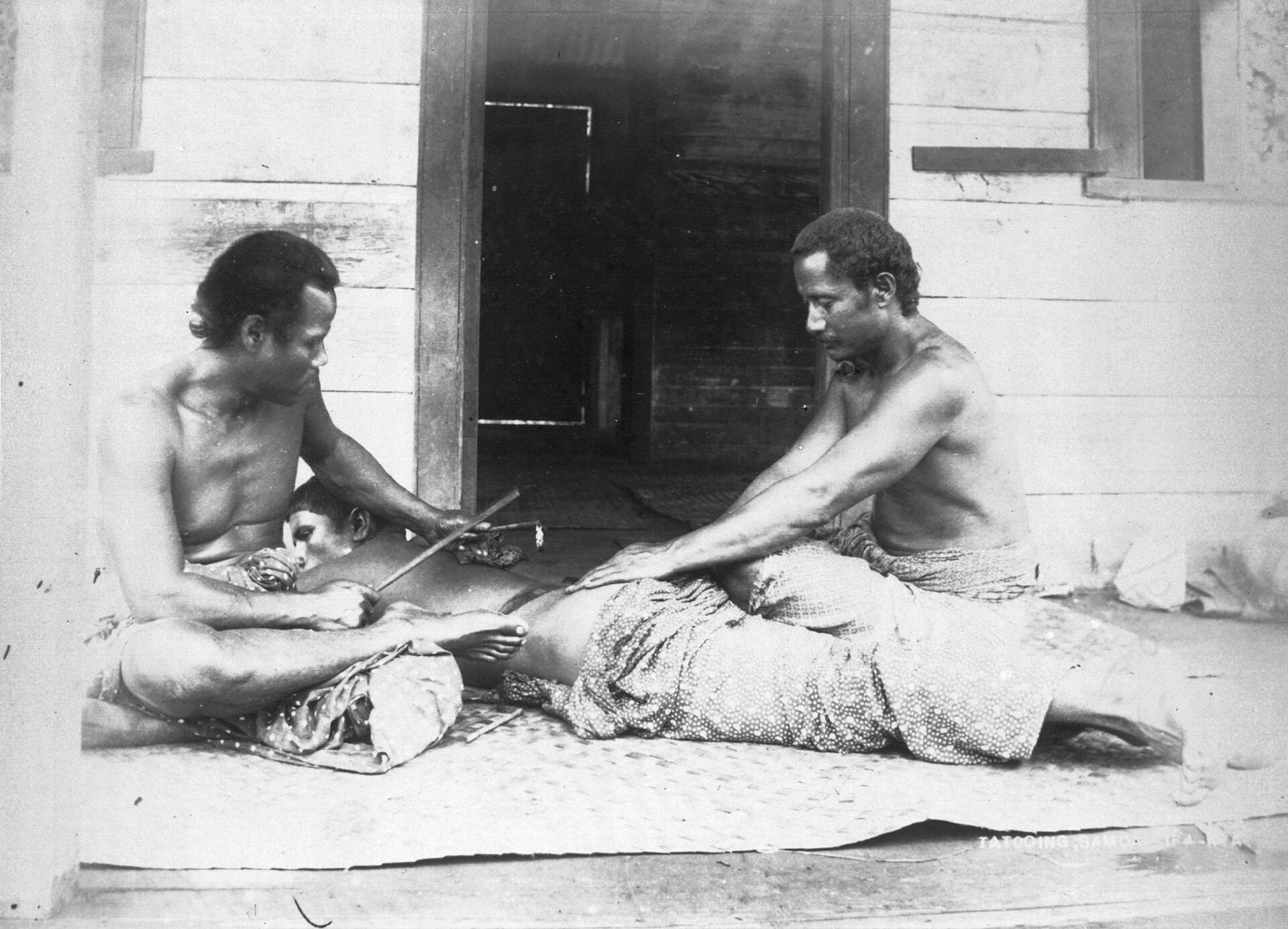
The basic tool kit of a tufuga ta tatau (Samoan tattooist ) includes a set of tattoo combs (`au), a short wooden rod or mallet (sausau), a mortar and pestle, and a palette for mixing pigment.
Source: Te Papa, au (tattooing implement), Te Papa Tongarewa, Museum of New Zealand, Unknown
The `au (tattooing combs ) are traditionally made of three components: a small bone comb (or chisel) from boar’s tusk, a turtle shell plate, and a wooden handle, all attached with coconut fiber. These combs come in different widths for various line qualities.
Source: Te Papa, au (tattooing implement), Te Papa Tongarewa, Museum of New Zealand, Unknown
Modern `au may replace turtle shell with Perspex or metal, and coconut fiber with nylon fishing line, to allow for sterilization and due to restrictions on turtle fishing.
Source: Te Papa, au (tattooing implement ), Te Papa Tongarewa, Museum of New Zealand, Unknown
The sausau is a wooden rod used to strike the `au, depositing pigment into the skin.
Source: Te Papa, au (tattooing implement ), Te Papa Tongarewa, Museum of New Zealand, Unknown
Traditionally, pigment was made from the soot of the candlenut (lama nut ), collected by placing a coconut shell over smoldering nuts, and then mixed with sugar water. Nowadays, commercial inks are more commonly used.
Source: National Park Service, Samoan Art in the Tatau (Tattoo), National Park Service, 2019
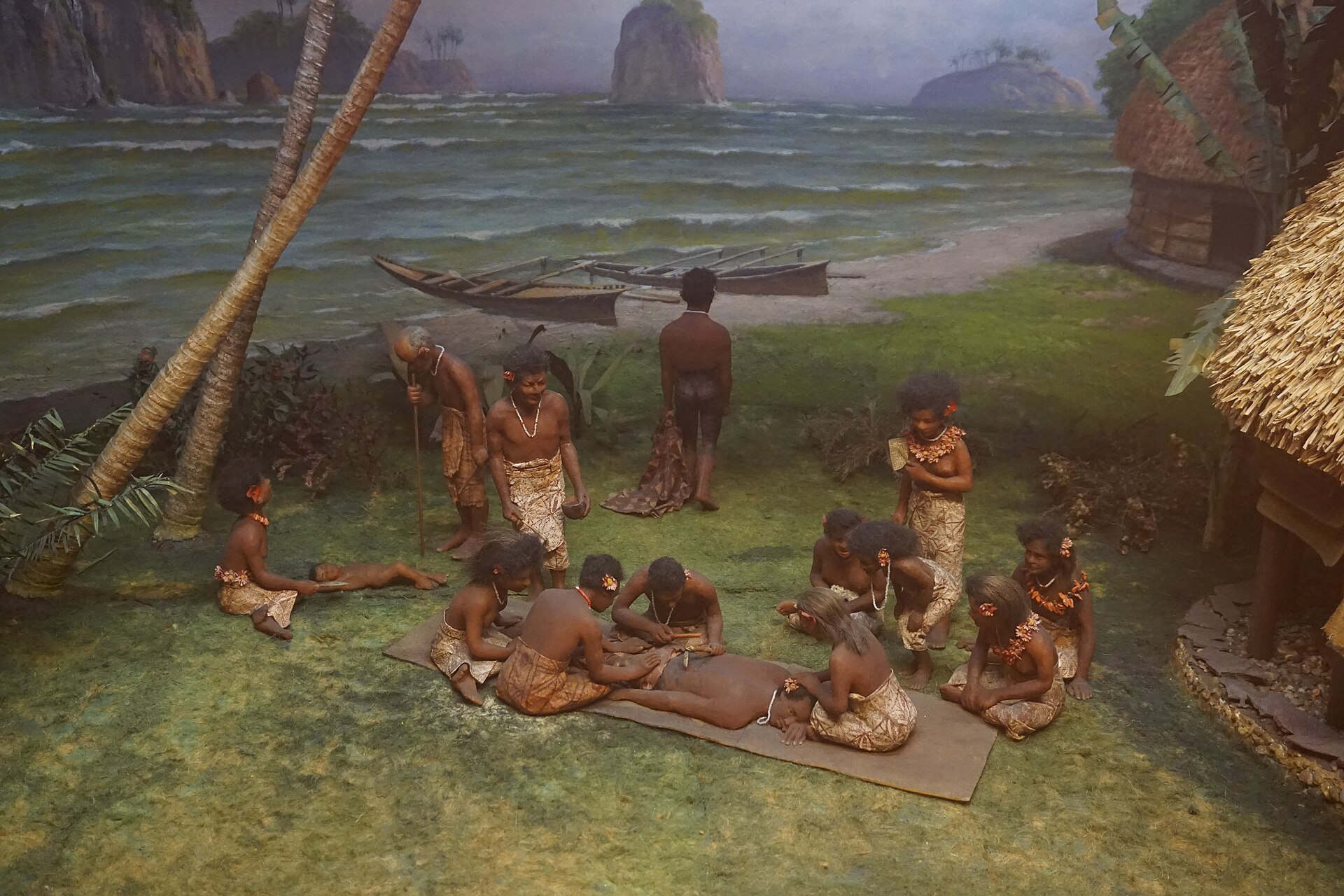
The tattooing technique is hand-tapping, where the tufuga uses the sausau to rhythmically strike the `au.
Source: The Koko Samoa, Samoan Tatau: Sacred Meaning of the Pe'a and Malu, The Koko Samoa, 2025
The tufuga works with two assistants, the ‘au toso, who stretch the skin, wipe ink and blood, and support the process.
Source: The Koko Samoa, Samoan Tatau: Sacred Meaning of the Pe'a and Malu, The Koko Samoa, 2025
Receiving the pe’a is an intensely painful rite of passage, carried out over multiple sessions across days or weeks, signifying deep cultural significance and readiness for adult life and service.
Source: NZGeo, Tatau: A History of Sāmoan Tattooing, NZGeo, Unknown
Tattooing ceremonies are often accompanied by rituals, prayers, and singing, creating a profound spiritual connection.
Source: Measina Samoa, Samoan Mālōfie Motifs and Their Meanings, Measina Samoa, 2024
For men, the pe'a is typically received at the onset of puberty and prepares individuals for entering le saofaliga a matai (the village council of chiefs ).
Source: National Park Service, Samoan Art in the Tatau (Tattoo), National Park Service, 2019
The female malu is lighter and its application is less ritualized compared to the pe'a, but still marks a significant transition in a woman's life.
Source: NZGeo, Tatau: A History of Sāmoan Tattooing, NZGeo, Unknown
Women sing songs to occupy and deter the pain of the person being tattooed during the sessions.
Source: National Park Service, Samoan Art in the Tatau (Tattoo ), National Park Service, 2019
Colonial suppression & modern revival
Historical timeline with citations.
Western missionaries actively suppressed the practice of tā tatau from the 1850s onwards. Where it survived, it became a private ritual rather than a communal one.
Source: NZGeo, Tatau: A History of Sāmoan Tattooing, NZGeo, Unknown
Colonial authorities restricted the practice of tatau, and many diaspora Samoans of the second and third generations grew up distant from the practice.
Source: The Koko Samoa, Samoan Tatau: Sacred Meaning of the Pe'a and Malu, The Koko Samoa, 2025
Despite suppression, the Samoan tatau survived due to a combination of factors, including young men traveling to different parts of the archipelago to get tattooed when local chiefs banned the practice in the 1860s.
Source: Sapiens.org, How the Samoan Tattoo Survived Colonialism, Sapiens.org, 2019
Samoan independence led to a revival of tā tatau. In the 1960s and 1970s, Samoans arriving in New Zealand for work introduced the practice to the country.
Source: NZGeo, Tatau: A History of Sāmoan Tattooing, NZGeo, Unknown
Today, the tradition is experiencing one of its strongest periods of revival. Tufuga ta tatau travel internationally to serve diaspora communities, and young Samoans are receiving the pe'a and malu in growing numbers.
Source: The Koko Samoa, Samoan Tatau: Sacred Meaning of the Pe'a and Malu, The Koko Samoa, 2025
UNESCO has recognized the importance of Samoa's living cultural heritage, and the tatau is widely treated as an inseparable part of that ecosystem.
Source: The Koko Samoa, Samoan Tatau: Sacred Meaning of the Pe'a and Malu, The Koko Samoa, 2025
Full cross-tradition reference: open the sourced reference guide.
Glossary terms
Definitions live in the design glossary.
Samoan gallery13 photos
Wikimedia Commons imagery filtered to Samoan.
Frequently asked questions
What is a Samoan tattoo?+
Samoan tatau is the oldest continuously practiced tattoo tradition in Polynesia. The word 'tattoo' itself entered English from the Samoan tatau. The tradition is known as Tatau and comes from Samoa · Western Polynesia.
What are the signature motifs of Samoan tattoos?+
Signature Samoan motifs include: Va'a — canoe forms marking journey and lineage; Aveau — starburst clusters for guidance; Fa'avaetuli — plover-foot rows along the spine; Pula tama & pula tele — filled dots and blocks; Ulumanu — bird-of-the-heart bands wrapping the thighs.
Where on the body are Samoan tattoos traditionally placed?+
Waist-to-knee body suits (pe'a), thigh-to-knee bands (malu), and increasingly modern half- and full-sleeve interpretations.
Related
Go deeper on Samoan tattoos
Motif library →
See Samoan motifs alongside symbols from every tradition.
Design glossary →
Samoan vocabulary in context.
Placement guide →
How these designs sit on sleeves, chest, back and legs.
Artist directory →
Practitioners working in Samoan tradition.
Meanings & symbols →
Long-form explainer covering every tradition.
Choosing an artist →
Consultation checklist and questions to ask.