History
Kākau collapsed almost entirely during 19th-century missionary rule and the near-extinction of the hand-tap lineage. Since the 1980s, artists like the late Keone Nunes have re-linked the practice to Samoan tatau elders, and kākau uhi is once again performed with traditional tools at ceremonies across the islands.
Typical placements
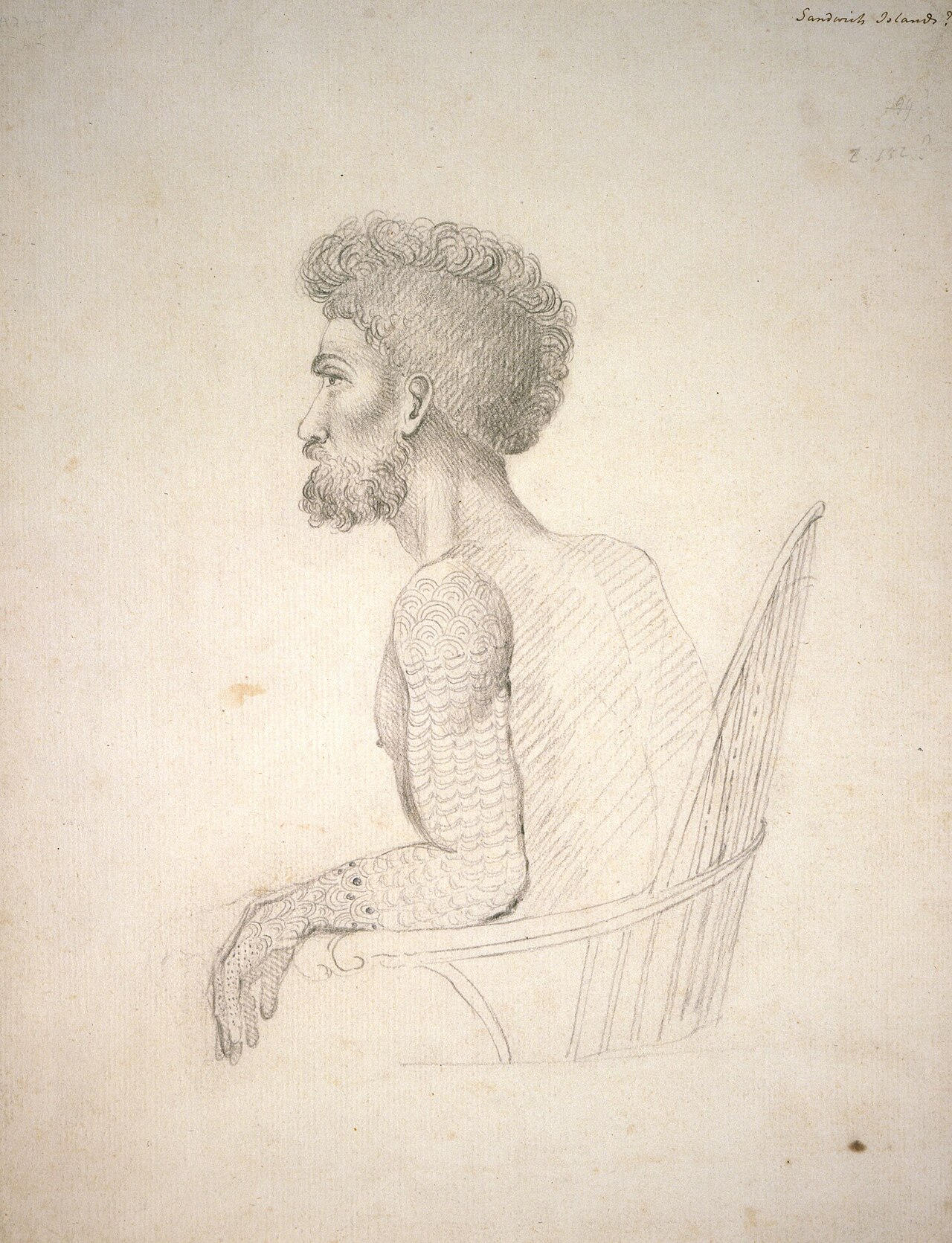
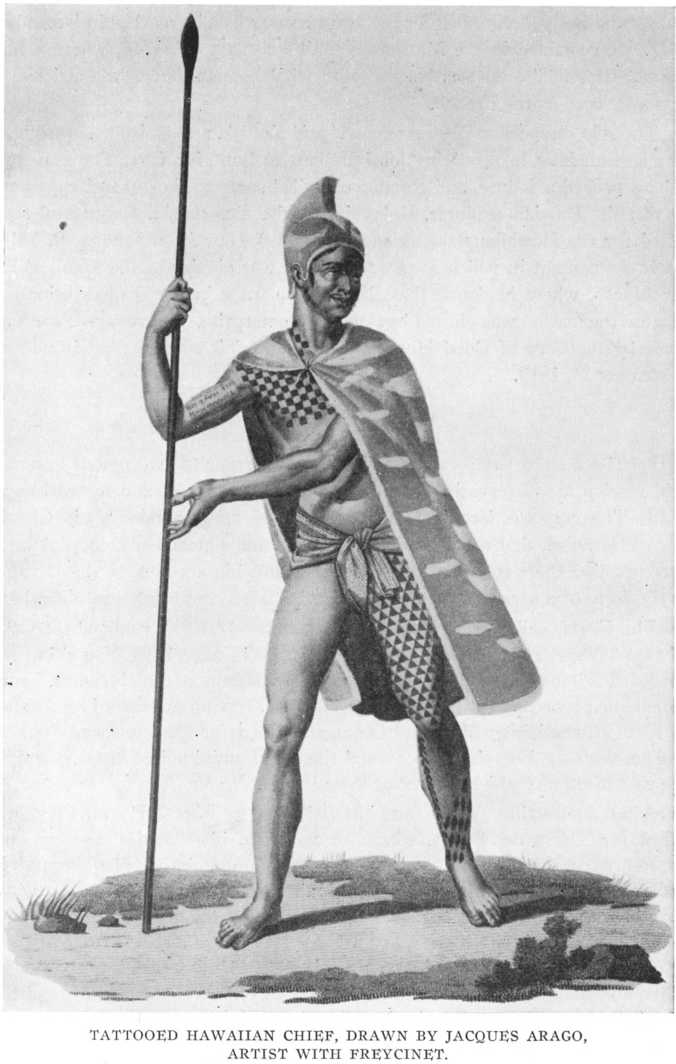
Half-body panels split down the midline, calves, thighs, and full sleeves with wrist and hand extensions.
Signature motifs
- Niho manō — shark teeth for protection and ferocity
- 'Iwa — frigatebird wings for the navigator
- Kapa — banded, filled panels echoing bark-cloth patterns
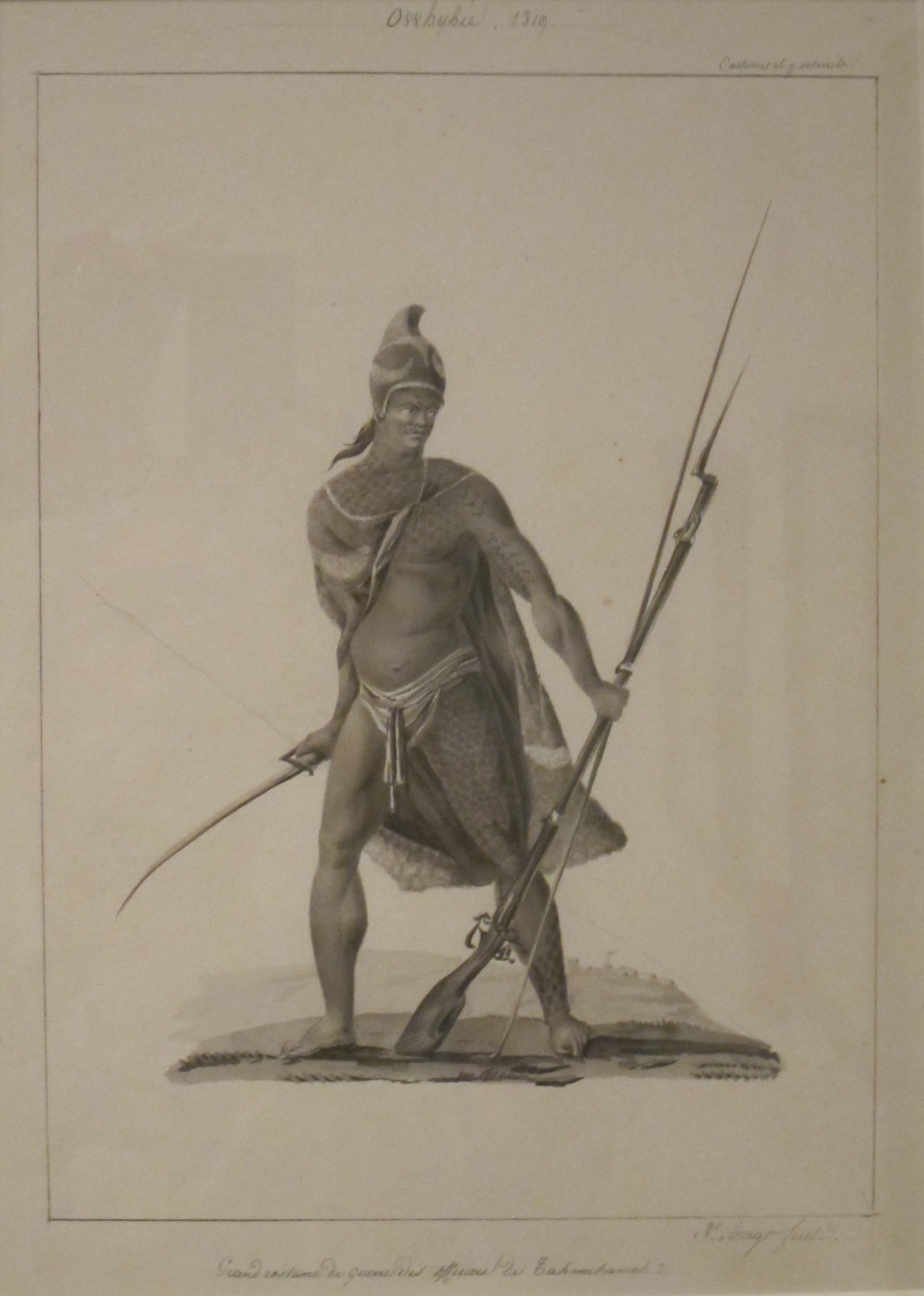
- Mahiole — chief's-helmet crest forms
- Papa hehi — checkered field of ancestral order
Sources
Tools, techniques & ceremonies
Documented from published ethnography and museum records.
Traditional Kākau is performed with hand tools created by the master tattooist, typically made from sharpened albatross bone due to its hardness and less porous nature. Tools vary in width depending on the area of coverage.
Source: "Kākau: The Art of Native Hawaiian Tattooing," Just Living 808, 2018.
Traditionally, ink was made from the soot of the kukui tree nut. However, commercial ink is often used today for better longevity and performance.
Source: "Kākau: The Art of Native Hawaiian Tattooing," Just Living 808, 2018.
The tattooing technique is hand-tapped (kākau ), where the bone tool is applied to the skin and tapped with another stick to drive the ink into the skin. The tapping rhythm is part of the ceremonial process.
Source: "Kākau: The Art of Native Hawaiian Tattooing," Just Living 808, 2018.
The process of receiving a traditional Kākau tattoo is not open to everyone; the master tattooist determines an individual's readiness through personal interviews. A meaningful reason, such as a connection to one's ancestors and Hawaiian identity, is required.
Source: "Kākau: The Art of Native Hawaiian Tattooing," Just Living 808, 2018.
The tattoo is considered a visual reminder of one's responsibility to family and community. Inappropriate behavior can deem an individual not ready for a tattoo.
Source: "Kākau: The Art of Native Hawaiian Tattooing," Just Living 808, 2018.
Colonial suppression & modern revival
Historical timeline with citations.
After the death of Kamehameha I in 1819, the kapu (taboo ) system began to collapse, leading to the discouragement and suppression of Kākau. The closely guarded secrets of Kākau died along with the kahuna (experts) who applied the designs.
Source: "Tattoo and Taboo: Kakau in Hawai`i," PBS Skin Stories, 2003.
European settlers and missionaries arrived in the Hawaiian islands soon after Captain James Cook, contributing to the erosion of traditional practices like Kākau.
Source: "Tattoo and Taboo: Kakau in Hawai`i," PBS Skin Stories, 2003.
The revival of Kākau represents a reclamation of identity, history, and spiritual connection for Hawaiians.
Source: "The Revival of Hawaiian Tattoo Culture: Meaning and Modern Trends," lyslaw.com, 2025.
Keone Nunes is a master tattoo artist who has been at the forefront of the movement to bring "uhi" (traditional tattooing ) back to the islands, starting his practice in 1996 using the traditional Polynesian tapping method.
Keliʻi Makua was recognized as "Kahuna Ka Uhi" (Priest of Tattooing ) in December 2016 through a ceremony that had not been performed for over 200 years, marking a significant event in the revival.
Source: "Featured Artist: Keliʻi Makua," Hawaii Tattoo Expo, Unknown.
Full cross-tradition reference: open the sourced reference guide.
Glossary terms
Definitions live in the design glossary.
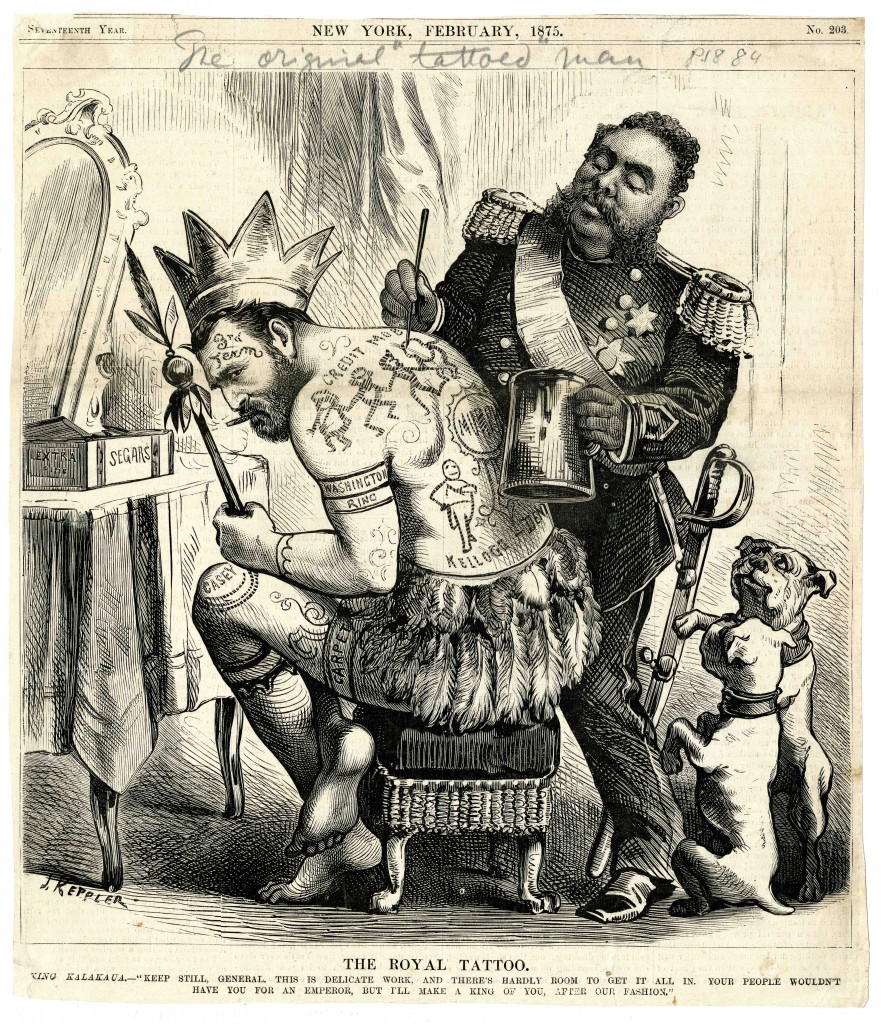
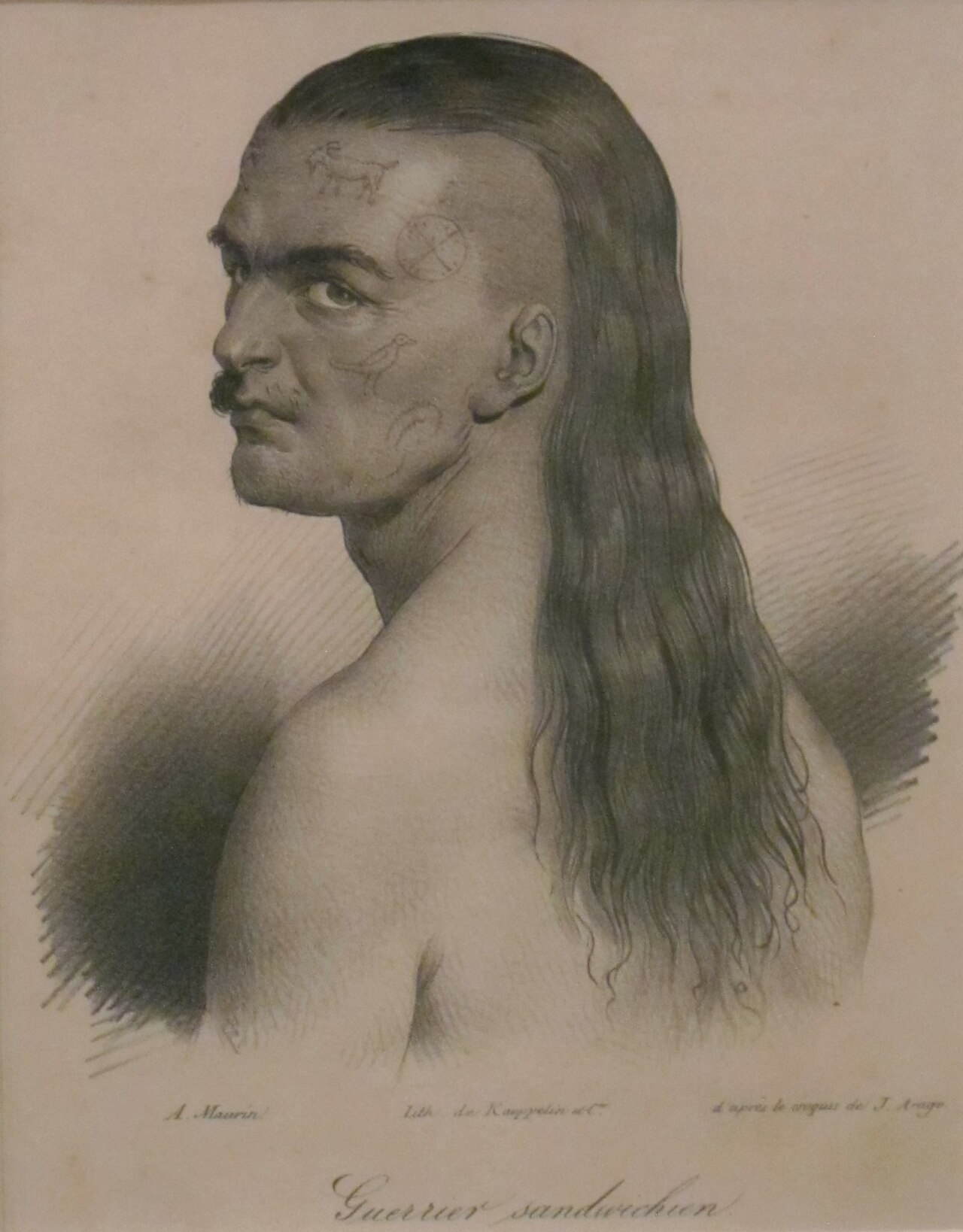
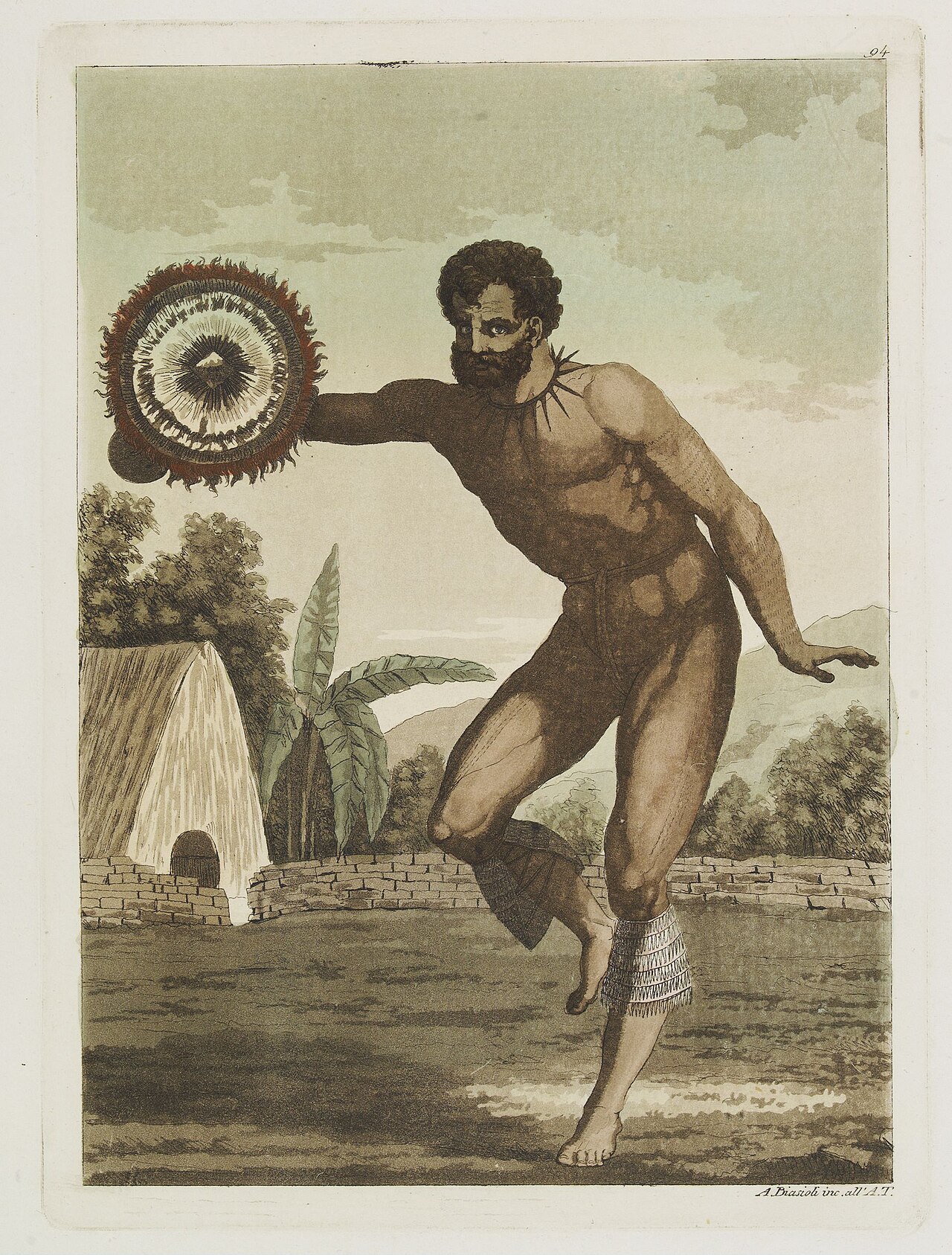
Hawaiian gallery7 photos
Wikimedia Commons imagery filtered to Hawaiian.
Frequently asked questions
What is a Hawaiian tattoo?+
Kākau was the tattooing of chiefs and warriors of the Hawaiian Islands, hand-tapped with albatross-bone combs and inks of kukui-nut soot. The tradition is known as Kākau and comes from Hawaiʻi · Eastern Polynesia.
What are the signature motifs of Hawaiian tattoos?+
Signature Hawaiian motifs include: Niho manō — shark teeth for protection and ferocity; 'Iwa — frigatebird wings for the navigator; Kapa — banded, filled panels echoing bark-cloth patterns; Mahiole — chief's-helmet crest forms; Papa hehi — checkered field of ancestral order.
Where on the body are Hawaiian tattoos traditionally placed?+
Half-body panels split down the midline, calves, thighs, and full sleeves with wrist and hand extensions.
Related
Go deeper on Hawaiian tattoos
Motif library →
See Hawaiian motifs alongside symbols from every tradition.
Design glossary →
Hawaiian vocabulary in context.
Placement guide →
How these designs sit on sleeves, chest, back and legs.
Artist directory →
Practitioners working in Hawaiian tradition.
Meanings & symbols →
Long-form explainer covering every tradition.
Choosing an artist →
Consultation checklist and questions to ask.